Little Samurai Cat Machine Embroidery
A Playful Yet Bold Statement for Boutique Apparel
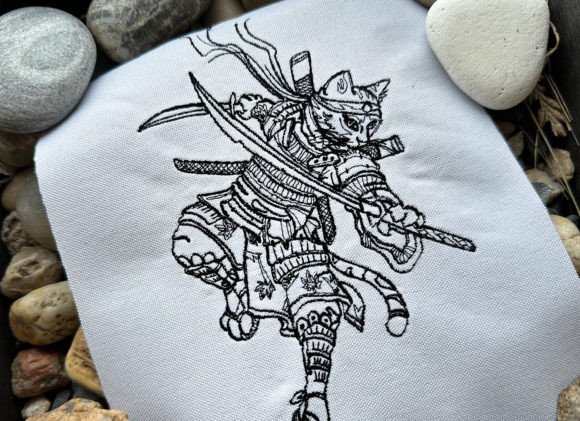
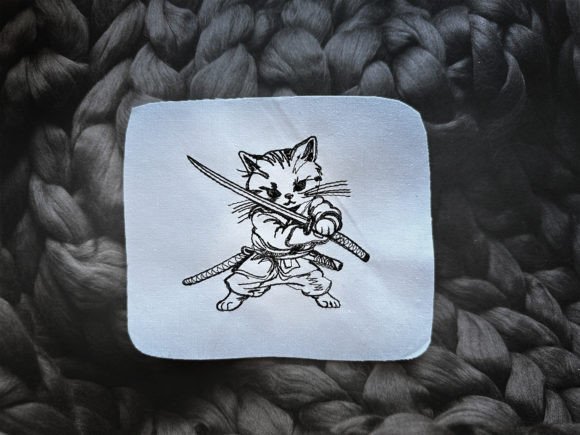
As an embroidery designer who’s developed over 200+ commercial collections for small clothing brands and Etsy sellers, my first glance at Little Samurai Cat Machine Embroidery stopped me mid-scroll. It’s not just another cat motif—it’s a character with attitude: sharp black outlines, confident posture, tiny katana, and expressive eyes that read instantly at 3 inches wide. The design leans into playful boldness—not cutesy, not edgy, but *intentionally whimsical*. It feels premium because of its clean line work and balanced negative space, yet it’s casual enough to land on a relaxed-fit hoodie without seeming costumed or gimmicky.
How It Performs Across Real Apparel Projects
I tested Little Samurai Cat Machine Embroidery across six garment types in my studio—neutral heather sweatshirts, blush pink hoodies, natural canvas totes, midweight cotton tees, structured denim jackets, and oversized fleece pullovers. On light-colored fabric (as clearly warned), the black-outline-only construction delivers crisp, graphic impact. There’s no fill to mute contrast or add bulk—so stitch density stays low, hoop time is quick, and thread consumption is minimal. That makes it ideal for high-turnover boutique merchandise where speed and consistency matter.
- Sweatshirt & hoodie chest placement: At 2.8” wide, it fits perfectly centered above the left chest pocket on standard unisex sweatshirts—no crowding, no awkward stretching. The silhouette reads clearly even from 6 feet away.
- Sleeve accents: Positioned just below the shoulder seam on a rolled sleeve, it adds subtle storytelling without overwhelming the garment’s structure.
- Tote bag & denim jacket backs: Scales beautifully up to 4.5” using standard embroidery software—maintaining line integrity without pixelation or jagged edges.
- Seasonal lifestyle layers: Paired with cozy oatmeal knits or ivory corduroy, the design elevates handmade product photography. It reads as intentional, not decorative filler.
Where to Use It—And Where to Pause
Little Samurai Cat Machine Embroidery shines brightest on stable, light-to-mid-tone fabrics with low stretch and smooth texture. Think combed cotton, midweight fleece, twill, and tightly woven canvas. But here’s what demands attention:
- Dark garments: Avoid entirely unless you’re willing to add a white underlay—and even then, Creative Fabrica’s warning stands: no filled background means poor contrast on charcoal, navy, or black. This isn’t a limitation of the file—it’s a deliberate stylistic choice.
- Stretchy or ribbed fabric: The thin black lines can distort on highly elastic knits. I recommend testing on scrap ribbed cotton before committing to a full run of raglan tees.
- Curved surfaces (like rounded hems or tapered sleeves): Hoop stabilization becomes critical. A medium-cutaway stabilizer + basting stitch helps hold shape during stitching.
- Tiny lettering or fine detail areas: There is none—this is pure silhouette. That’s a strength for clarity, not a weakness. Don’t expect micro-text; do expect instant recognition.
Why It Strengthens Your Brand Identity
For small shops building visual consistency, Little Samurai Cat Machine Embroidery functions like a signature accent—not a standalone logo, but a memorable motif that reinforces personality. When used across sweatshirt embroidery, tote bags, and social media graphics, it creates continuity without repetition. Buyers begin to associate that confident feline stance with your boutique brand’s tone: approachable, clever, quietly confident. That builds trust faster than generic florals or abstract shapes.
On Etsy listings, it performs well in printable mockups—especially flat-lay shots with neutral backdrops—because its strong outline pops against soft shadows and textured paper. And unlike dense fill designs, it doesn’t compete with garment texture in lifestyle photos. You get clean product recognition without post-production cleanup.
Practical Designer Notes Before You Stitch
Before adding Little Samurai Cat Machine Embroidery to your next collection, take these five minutes:
- Test on scrap fabric pulled from the exact garment batch—fabric shrinkage and dye lot variation change how black thread reads.
- Confirm stabilizer choice: Medium-weight cutaway works best for sweatshirts and hoodies; tear-away suffices for stable cotton tees.
- Review thread color contrast: Stick with true black rayon or polyester for maximum definition. Charcoal or gray threads blur the intent.
- Verify hoop size compatibility: The original file fits comfortably in a 4x4 hoop—but always check Creative Fabrica’s product details before scaling.
- Compare placement options: Try it centered, slightly off-center, or stacked vertically with minimalist text (e.g., “WARRIOR ENERGY”) for cohesive custom apparel series.
Final Thought: A Strategic Addition, Not Just Another Download
Little Samurai Cat Machine Embroidery won’t replace your core logo—but it might become your most-requested seasonal accent. Its charm lies in restraint: no gradients, no fills, no clutter. Just confident line work that translates cleanly from digital embroidery file to finished product. For Etsy sellers launching limited-run drops, small shops curating cozy capsule collections, or creative entrepreneurs building lifestyle-focused apparel lines, it’s a smart, scalable asset. It respects the craft of machine embroidery while serving real business needs—clarity, speed, recognition, and quiet distinction. Just remember: light fabric only, stabilizer matters, and always test before you commit thread and time.