Cat Samurai Machine Embroidery Design
A Bold, Playful Statement—With Critical Business Constraints
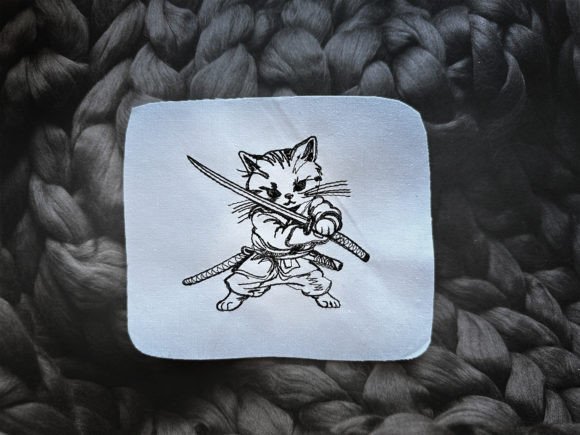
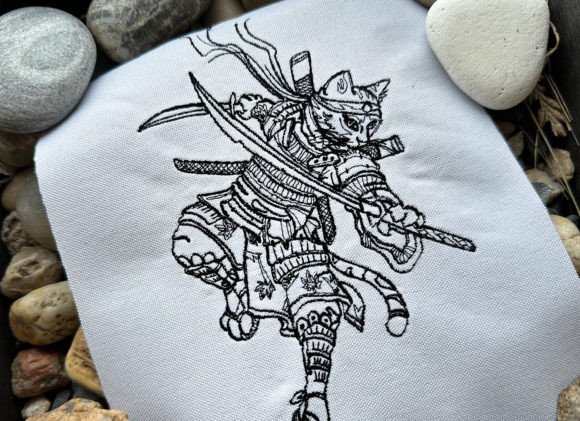
As an embroidery designer who’s developed hundreds of commercial designs for small businesses—from indie bakeries to pet boutiques—I opened the Cat Samurai Machine Embroidery Design with immediate curiosity. The title promises personality: feline charm meets warrior edge. The description confirms it’s a “warlike” concept rendered in crisp black outlines only—no filled background. That first impression? Confident, modern, and undeniably memorable—but also highly selective in application. It reads less like a decorative motif and more like a signature brand mark: playful enough for a cat café, bold enough for a streetwear line, yet unmistakably handcrafted in spirit.
Where This Design Shines in Real Small Business Merch
The Cat Samurai Machine Embroidery Design excels where visual impact meets narrative—exactly what small businesses need to stand out without shouting. On an embroidered patch sewn onto a denim apron at a local florist or ceramic studio? Perfect. Its sharp linework reads clearly at 2.5–3 inches wide, reinforcing craftsmanship and whimsy in equal measure. As a chest logo on staff uniforms for a pet-friendly café or boutique? Strong—it conveys warmth and character without sacrificing professionalism. On a structured cap front (think cotton twill or brushed cotton), the clean black outline holds shape beautifully—especially when paired with a subtle tonal thread or matte black bobbin.
For tote bag design, this machine embroidery file works best as a centered accent near the top seam—not sprawling across the full panel. Its minimalist construction avoids bulk, letting the fabric breathe while still anchoring the piece visually. As a sleeve detail on custom apparel or a branded product label stitched onto handmade soap packaging or candle wraps, it adds artisanal credibility fast. Etsy sellers and crafters will appreciate how easily it integrates into printable mockups: its high-contrast outline translates cleanly to digital previews, helping buyers instantly grasp the finished product.
Where Caution Is Non-Negotiable
This is not a “set-and-forget” embroidery file. Because it has no filled background—only black outlines, its success hinges entirely on context. It is explicitly labeled: for light colored fabric ONLY. That means no off-white, ecru, oatmeal, or heather grey unless you’ve physically tested contrast with your exact thread and fabric combo. Dark uniforms? Absolutely off-limits—unless reversed with white thread on dark fabric (which requires re-digitizing, not included). And while the warlike theme suggests strength, the design’s delicate linework makes it vulnerable on textured fabrics like heavy canvas, corduroy, or looped terry—where stitches can sink or distort without aggressive stabilizer support.
Small patch sizes under 2 inches demand extra scrutiny. At 1.5 inches wide, fine details—like the curve of the cat’s ear or the tip of the katana—may blur or stitch inconsistently depending on your machine’s tension and hoop size. Cap embroidery on curved fronts also risks distortion if the outline isn’t digitized with gentle pull compensation (a detail you’ll want to verify before production). And because there’s no fill to anchor the design, high stitch density isn’t the concern—stitch placement accuracy and stabilizer choice are. Skip tear-away for knits; opt for cut-away + topping on fleece or terry.
How It Shapes Brand Identity—and Customer Trust
In small business merch, every stitch communicates intention. The Cat Samurai Machine Embroidery Design doesn’t whisper—it asserts identity with wit and precision. When customers see it on a barista’s apron or a florist’s tote, they register authenticity: this isn’t stock clipart. It signals a brand that values storytelling, craftsmanship, and distinctive visual language. That builds trust faster than generic logos ever could.
But consistency matters. If your other design assets—labels, social graphics, packaging—lean minimalist and modern, this machine embroidery design fits seamlessly. If your brand voice is elegant or rustic, however, its bold, graphic energy may clash unless balanced thoughtfully (e.g., pairing it with neutral typography or earthy thread colors). For pet brands especially, it elevates perceived value: a handmade product with this embroidered patch feels curated, not mass-produced—even if sold at scale.
Practical Designer Notes for Commercial Use
- Always test in black and white first. Run a baste stitch on scrap fabric to confirm outline integrity—no skipped jumps or thinning lines.
- Verify small-patch performance. Resize the embroidery file to your target patch dimensions and check spacing between elements—especially the sword and cat silhouette.
- Review thread color contrast rigorously. Black thread on ivory linen? Yes. Black thread on natural unbleached cotton? Possibly too low-contrast—test with your supplier’s swatches.
- Confirm hoop size compatibility. Some versions of this design may require a 4x4 hoop minimum—check your file metadata before batching orders.
- Use appropriate stabilizer. Medium-weight cut-away for stable wovens; cut-away + water-soluble topping for knits or napped fabrics.
- Create a physical mockup before client approval. Digital previews lie—fabric drape, stitch sheen, and texture change everything.
- Compare beside your full suite of design assets. Does it harmonize with your logo, icons, and typography—or does it compete?
- Confirm commercial licensing. This is a digital embroidery file intended for business use—but always validate usage rights with the seller before applying to resale merchandise.
Final Thought: A Strategic Asset—Not Just a Cute Cat
The Cat Samurai Machine Embroidery Design isn’t just another cats-themed embroidery file. It’s a compact brand amplifier—ideal for small businesses that want personality without clutter, distinction without complexity. Used intentionally—with attention to fabric, scale, contrast, and context—it strengthens recognition, deepens customer connection, and elevates everyday items into signature pieces. But its power comes with responsibility: respect its constraints, test relentlessly, and treat it as part of your broader design strategy—not just a quick stitch-and-ship element. When done right, it doesn’t just decorate your merch. It defines it.