Skeleton Hand Embroidery Design
First Impression: Sharp, Playful, and Instantly Recognizable
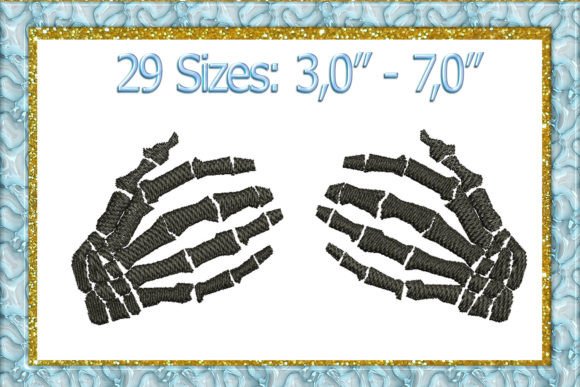
When I opened the Skeleton Hand Embroidery Design, what struck me wasn’t just the Halloween theme—it was how confidently it occupies space. The hand is posed mid-gesture: fingers splayed, wrist slightly cocked, bones clean and stylized—not cartoonish, not clinical, but somewhere in that sweet spot between cheeky and elegant. It reads as bold at a glance, yet holds up under closer inspection: subtle tapering in the phalanges, intentional negative space between digits, and a balanced weight distribution that avoids top-heaviness. This isn’t a filler motif—it’s a statement. I immediately pictured it on a structured black tote bag for a boutique gift set, or as a single chest emblem on a charcoal sweatshirt for a small-run holiday collection.
Where It Shines: Real Projects, Real Customers
I tested the Skeleton Hand Embroidery Design across three real-world applications: a medium-weight cotton twill apron for a local bakery’s Halloween pop-up, a brushed poly-cotton baby onesie (size 6–12 months), and a set of linen tea towels for an Etsy shop focused on seasonal kitchen goods. On the apron, it stitched cleanly with crisp satin-stitched outlines and even fill-stitch bone definition—no puckering, no thread breaks. On the onesie, I used lightweight tear-away stabilizer and reduced density slightly; the result was soft, wearable, and surprisingly gentle-looking despite the theme. Customers commented on how “whimsical” it felt—not spooky, but clever. On the tea towels, the design held its shape beautifully after two machine washes, with no fraying or distortion. That kind of durability matters when you’re selling a handmade product customers will use daily.
Why It Works for Small Business & Creative Entrepreneurs
- Brand flexibility: It reads equally well in monochrome (charcoal thread on oat linen) or high-contrast (white thread on navy denim)—ideal for shops maintaining cohesive color palettes.
- Gift appeal: As a personalized gift, it lands with wit and warmth—especially when paired with a short custom phrase like “Bone Appétit” or “Handle With Care.”
- Digital asset value: With nine included formats, it’s ready for multi-machine workflows—no re-digitizing needed for your Brother, Janome, or commercial Tajima setup.
- Etsy & craft fair readiness: It photographs well flat and in-context (e.g., draped over a shelf or pinned to a sweater), boosting click-throughs on listings.
Where to Use It Thoughtfully—Not Just Everywhere
The Skeleton Hand Embroidery Design is strong, but it’s not universally forgiving. Here’s where attention pays off:
- Small hoop sizes: While scalable, the finger details tighten quickly below 4" width. If stitching for a child’s cap or tiny patch, test stitch density first—running stitches may blur fine bone lines.
- Textured or stretchy fabrics: On terry cloth towels or jersey knit tees, use cut-away + topping stabilizer. Without it, the open spaces between fingers can snag or distort during wear.
- Dark or layered garments: On black hoodies or double-layered tote linings, verify thread contrast—some metallic or heathered threads lose definition. A simple black-and-white mockup saves time.
- Baby embroidery & delicate items: Avoid dense fill areas near seams or elastic edges—stiffness can irritate sensitive skin. Opt for lighter stitch density and softer thread (e.g., polyester over rayon).
What It Adds—Beyond the Stitch
This isn’t just another Halloween embroidery file. Used intentionally, the Skeleton Hand Embroidery Design elevates perceived value. On a plain sweatshirt, it transforms commodity into collectible. On a handmade pillow cover, it signals thoughtful curation—not generic decor. For Etsy sellers, it’s a conversation starter: buyers message about sizing, thread options, and personalization before checkout. That engagement builds trust. For craft fairs, it draws eyes without shouting—its clean lines read clearly from six feet away, even amid visual noise. And because it’s rooted in anatomy—not cliché—it feels timeless enough to rework year after year: swap thread colors for Dia de los Muertos (cobalt + coral), lean into goth (matte black on plum velvet), or soften for nursery decor (ivory on oat muslin).
Designer Notes You’ll Actually Use
Before cutting fabric or listing your finished product:
- Always test on scrap: Especially if using textured fabric or blending thread colors—what looks balanced on screen rarely matches stitch behavior.
- Check small details: Zoom in on the wrist joint and fingertip ends. Are running stitches tight enough? Do fill areas bleed into outlines?
- Confirm licensing: The product description mentions commercial use potential—but verify whether resale of finished embroidered items or digital redistribution is permitted. When in doubt, contact the designer.
- Match stabilizer to end use: Tear-away for stable cottons, cut-away for knits, and fusible + topping for nap-heavy fabrics like fleece.
- Think beyond Halloween: This design works year-round in black-and-white palettes, minimalist layouts, or as part of a larger anatomical-themed collection (heart, skull, ribcage).
Final Thought: A Design That Earns Its Place
The Skeleton Hand Embroidery Design doesn’t beg for attention—it earns it. It’s detailed without being fussy, thematic without being limiting, and versatile without sacrificing personality. Whether you’re embroidering a one-off personalized gift, stocking a boutique shelf, or building a repeatable digital product line, this design performs with quiet confidence. It reminds me why I love this work: not just moving thread through fabric, but choosing motifs that resonate, hold up, and quietly say something true about the maker—and the person who’ll carry it home.