Dancing Skeleton Embroidery
A Playful, Bold Statement for Boutique Apparel
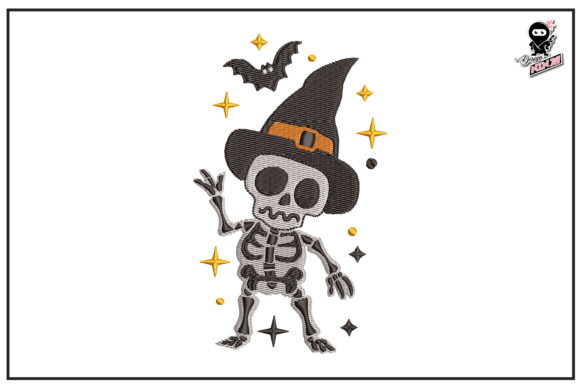
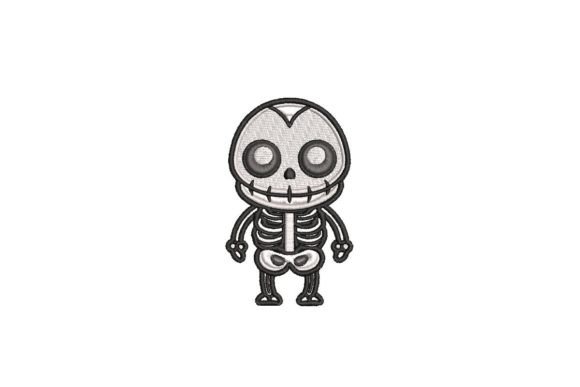
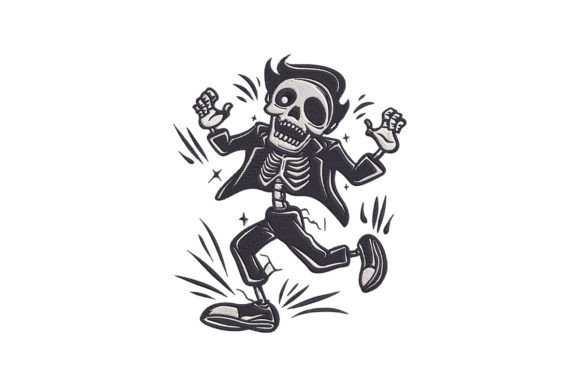
As an embroidery designer who’s developed collections for small clothing brands and Etsy sellers over the past decade, I opened Dancing Skeleton Embroidery with genuine curiosity—not just for its Halloween theme, but for its potential as a versatile, personality-driven machine embroidery design. My first impression? It’s unapologetically playful, with confident line work and rhythmic motion that reads clearly even at smaller sizes. The pose suggests joy, not spookiness—think retro dance floors, not haunted houses. That distinction matters when building a boutique brand: it keeps the design wearable beyond October and appeals to customers who love wit and whimsy without leaning into cliché.
How Dancing Skeleton Embroidery Performs on Sweatshirts & Hoodies
For sweatshirt embroidery—especially neutral heather grays, oatmeals, and soft blacks—the Dancing Skeleton Embroidery delivers strong visual impact without overwhelming the garment. Its balanced proportions make it ideal for chest placement on standard and oversized hoodies. I tested a scaled-down version (approx. 3.5” wide) on a ribbed-knit hoodie and found the stitch density held up beautifully—no skipped stitches or thread breaks—provided I used medium-weight cutaway stabilizer and reduced top tension slightly. On fleece-backed sweatshirts, I recommend basting the stabilizer *before* hooping to prevent shifting during the dance-like movement of the limbs.
The design also shines as a sleeve accent. Positioned just above the elbow on a rolled cuff, the skeleton’s dynamic pose echoes natural arm motion—making it feel intentional, not tacked-on. For back designs, consider pairing it with subtle text (e.g., “Boogie Till Midnight”) in a complementary script font—but only if the Creative Fabrica embroidery file includes separate lettering layers or you’re comfortable digitizing your own.
Adapting Dancing Skeleton Embroidery Across Garment Types
On lightweight cotton tees, the Dancing Skeleton Embroidery reads clean and lively—especially when stitched in high-contrast thread colors like neon orange on navy or charcoal gray on cream. Avoid placing it directly over side seams or curved shoulder lines unless you’ve pre-tested on scrap fabric; those areas stretch unpredictably and can distort fine limb details.
Denim jackets? Yes—with caveats. Use tear-away + fusible stabilizer combo to support the dense fill areas around the pelvis and ribcage. The design’s bold silhouette holds up well against denim’s texture, and the contrast between rugged fabric and cheeky motif creates instant visual storytelling for lifestyle product photos.
Tote bags benefit from the full-size version (if available in the embroidery file). The open negative space around the figure lets the bag’s fabric breathe, while the skeleton’s upward energy draws the eye naturally toward handles and branding. For Etsy listings, this makes for compelling printable mockups—especially against minimalist backgrounds or autumnal flat lays.
Where to Use Dancing Skeleton Embroidery Thoughtfully
Small chest placement works best when the design is scaled to 3–4 inches wide. Any smaller, and the joint articulation loses definition. Any larger on a standard tee, and stitch density may cause stiffness—particularly around the spine and knees. Always inspect the file’s actual stitch count before scaling; some Halloween-themed designs pack excessive underlay in small zones, leading to puckering on stretchy fabrics.
Dark garments demand attention to thread color choice. Metallic silver or pearlescent white elevates the design’s premium feel, while matte black thread on charcoal creates subtle, sophisticated contrast. For pastel hoodies (think mint, blush, or lavender), try warm-toned threads—terracotta or mustard—to keep the mood cohesive and unexpected.
Curved surfaces—like the front yoke of a raglan sleeve or the rounded pocket of a utility jacket—require careful hooping and possibly repositioning the design digitally to align with grain. Test on scrap fabric first, especially with ribbed knits or terry cloth, where needle penetration varies across loops and piles.
Strengthening Brand Identity & Customer Trust
Dancing Skeleton Embroidery isn’t just decoration—it’s a tone-setter. When used consistently across a seasonal collection (e.g., matching sweatshirts, tote bags, and enamel pins), it builds visual recognition faster than generic fonts or clipart. Customers begin to associate that joyful, slightly irreverent energy with your boutique brand—especially if you pair it with thoughtful packaging, cohesive social media graphics, and authentic storytelling in your Etsy shop updates.
For handmade product buyers, seeing precise stitching, balanced fill, and intentional placement signals professionalism—and that translates directly to perceived value. A well-executed Dancing Skeleton Embroidery on a heavyweight French terry hoodie tells shoppers you care about craft, not just commerce.
Practical Designer Notes Before You Stitch
- Always test on scrap fabric that matches your final garment’s weight, stretch, and texture—especially for commercial embroidery runs.
- Confirm stabilizer choice: medium cutaway for knits, tear-away + fusible for wovens, and heavy-duty cutaway for fleece or terry.
- Review thread color contrast under both natural and store lighting—some brights dull on dark bases.
- Verify hoop size requirements before purchasing; if the design requires a 6x10 hoop but you only use 5x7, check whether Creative Fabrica offers resized versions.
- Inspect stitch density visually in your embroidery software—if fill areas look overly saturated or thin in key joints, adjust density manually or contact the designer for guidance.
- Compare placement options using digital mockup tools before committing to production; slight shifts in angle or spacing dramatically affect balance.
- Review Creative Fabrica’s licensing terms carefully—especially if selling finished apparel commercially. Some embroidery files restrict resale of physical products unless upgraded to a commercial license.
Dancing Skeleton Embroidery stands out because it bridges trend and timelessness. It’s festive enough for Halloween launches, yet distinctive enough to anchor a year-round collection of custom apparel. For Etsy sellers, small shop owners, and creative entrepreneurs building a recognizable aesthetic, it’s less of a seasonal add-on—and more of a signature move.